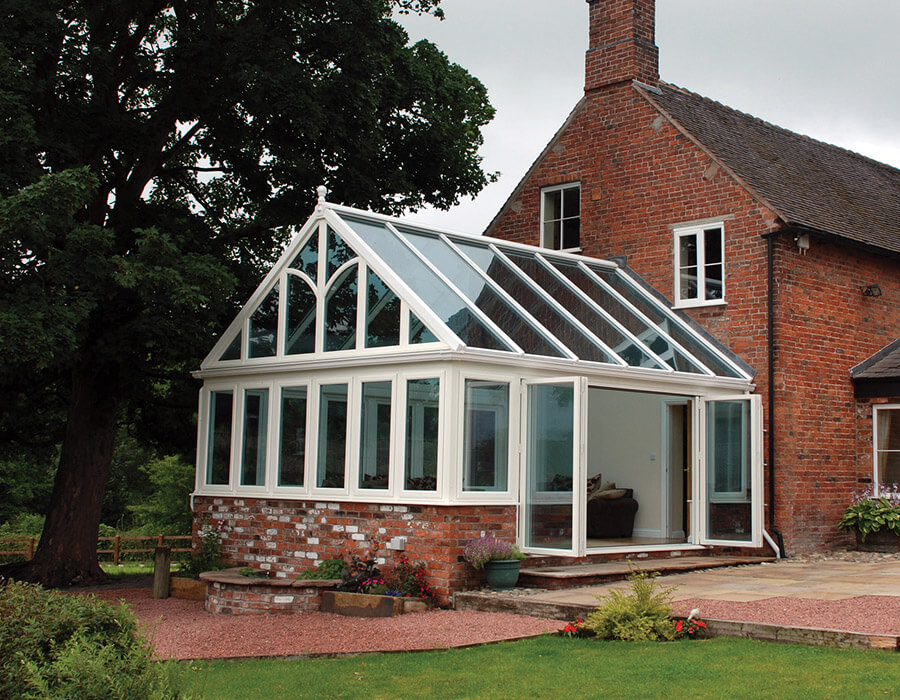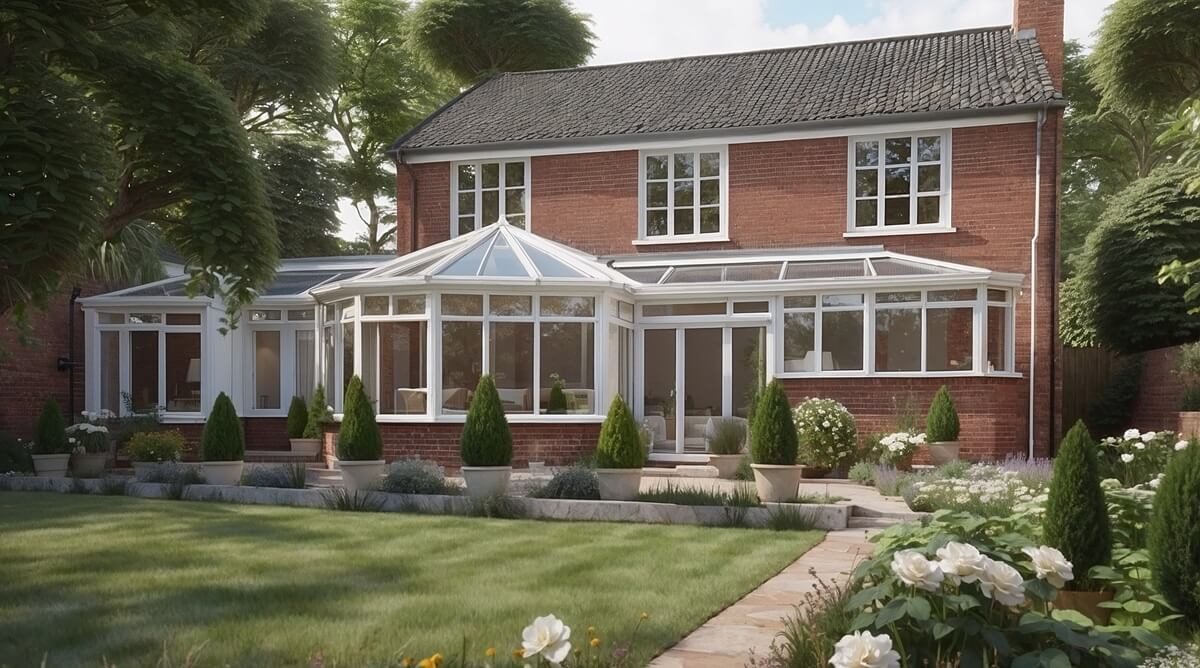

A luxury orangery is the most sympathetic extension you can add to a period home. Its brick pillars, solid perimeter roof, and central glazed lantern echo the weight and craftsmanship of older properties far better than a standard conservatory. If you own a character home in Devon and want more space without compromising its architecture, an orangery is likely your best option. Read on for design inspiration, material guidance, and planning advice specific to heritage properties.
Why orangeries suit period properties better than conservatories
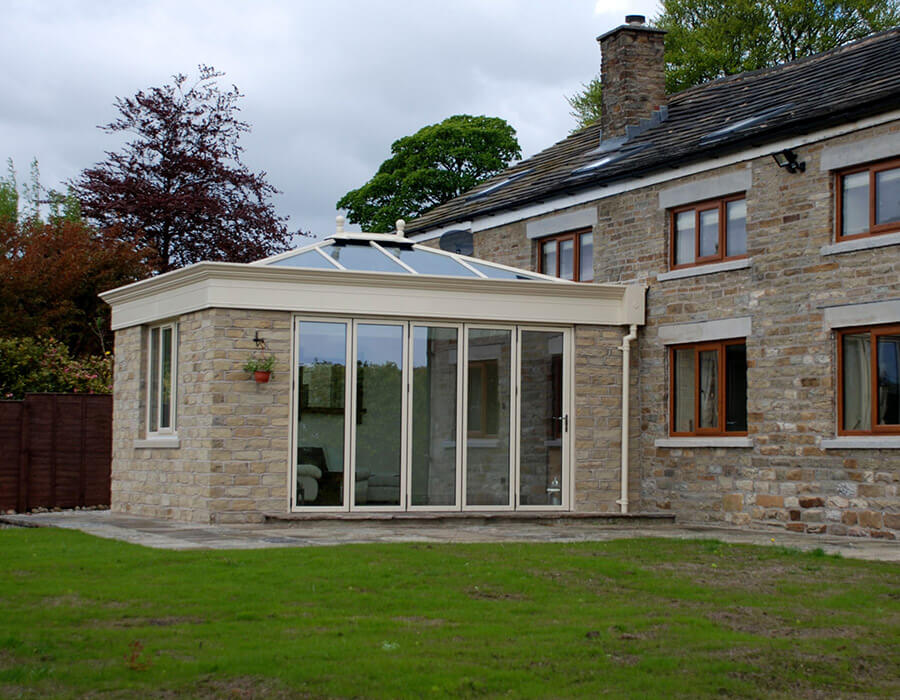
The structural make-up of an orangery is what sets it apart. Rather than a predominantly glass box bolted to the rear of your home, an orangery uses brick or stone pillars, solid wall sections, and a flat perimeter ceiling with a central roof lantern. This gives it a mass and permanence that reads as a natural part of the original building.
The solid elements also provide better thermal performance. The reduced glazed area prevents excessive solar gain in summer, while the brickwork retains heat through winter, making your new room usable 365 days a year rather than only on mild days.
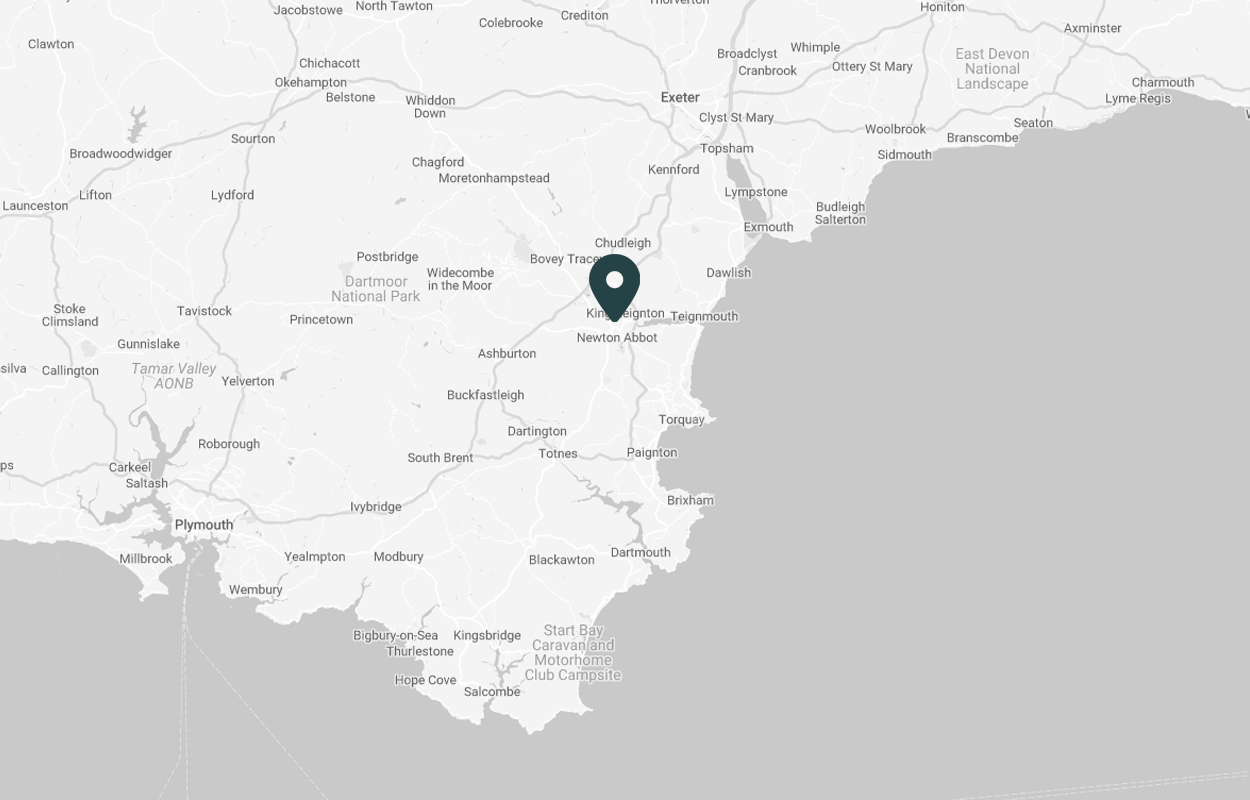
At Renaissance Conservatories, we work on period properties across Devon. Whether your home is a listed farmhouse, an Edwardian semi, or a Georgian cottage, the design process starts with the existing building. We pay close attention to proportions, detailing, and materials before drawing a single line.
Design features that maintain period authenticity
When designing luxury orangeries for older homes, several architectural details keep the extension looking considered rather than added-on:
Decorative cornices and pilasters. These period details, common in 17th and 18th century garden rooms, can be replicated precisely to match your home’s existing stonework or brickwork. Classical proportions and vertical sliding sash windows also help maintain a heritage aesthetic.
Matched or complementary masonry. The most successful designs use materials that tie back to the main house. This might mean reclaimed bricks sourced to match your original build, soft grey render that complements stone, or decorative brickwork that mirrors existing courses.
French doors and vertical glazing. Tall, narrow panes of glass read as more period-appropriate than wide horizontal runs. French doors anchor the design in heritage style while still opening the space to your garden.
Roof lanterns with slim sightlines. Our lantern roofs use slim aluminium profiles that let in maximum natural light without the heavy frames that would look out of place on an older property. This is one area where modern materials genuinely improve on the originals.
Browse our completed project gallery for design inspiration from recent builds across South Devon.
Roof options for heritage extensions
Choosing the right roof is one of the most consequential decisions in any orangery project, and the options read differently on period homes.
| Roof type | Best suited to | Thermal performance | Key benefit for period homes |
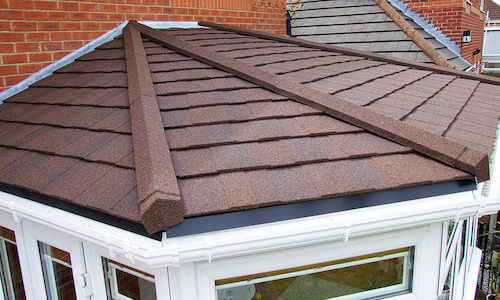
| Tiled roof (SupaLite) | Listed buildings, stone cottages | 0.18 W/m²K | Matches existing roof material; easiest to gain consent |
| Glass roof (Liniar) | Georgian/Edwardian homes | A+ rated | Maximises light; modern performance, traditional form |
| Lantern roof | Most period styles | High efficiency | Period-authentic focal point; slim aluminium sightlines |
For the most sympathetic period appearance, a tiled roof is usually the right call. Our SupaLite tiled roof system achieves a U-value of just 0.18W/m²K, significantly outperforming conventional glazed options. Tiles can be matched to your existing roof, and the system accepts roof windows or a central lantern where additional light is needed. For listed properties or homes in conservation areas, a tiled roof also tends to be the easiest to gain planning approval for, as it is most sympathetic to the original character of the building.
For those wanting to retain the classic lantern look, our Liniar Glass Roofing system achieves A+ energy efficiency while delivering the light-filled quality that makes orangeries so appealing.
Planning considerations for period and listed homes
Most orangery extensions fall under permitted development rights, meaning no formal planning application is required, provided the structure sits within size and height limits and covers less than 50% of the original garden. However, the rules are stricter for older properties.
If your home is listed, you will need Listed Building Consent before any work begins. Carrying out work without it is a criminal offence. Your local planning authority will typically require materials that match the original build closely, which is where our experience with period properties makes a real difference.
Homes in conservation areas also face additional scrutiny. We work closely with local authorities across Devon to ensure every project meets building regulations and planning requirements, and we manage applications on your behalf where needed. Read our full guide: Do you need planning permission for an orangery? to find out more.
What does a luxury orangery add to a period home’s value?
A well-designed orangery is a sound long-term investment. Premium orangeries typically increase property value by 5-15%, and unlike some home improvements that quickly date, a period-sympathetic design remains desirable to future buyers. The extra living space combined with architectural character makes these properties stand out in the Devon market.
Start your bespoke orangery project
At Renaissance Conservatories, we use in-house CAD design so you can see exactly how your orangery will look before a single brick is laid. From the first design consultation through to final handover, the Renaissance team handles every stage.
Call us on 01626 333 393, explore our orangery designs for traditional homes, or get a free quote today.
Installation Gallery
Are you interested in improving your home? Get in touch with Renaissance Conservatories, your local conservatory specialists today!
Get a FREE quote today