
The short answer: an orangery uses brick pillars, a solid perimeter roof, and a central glazed lantern, while a conservatory is predominantly glass, typically with a pitched or lean-to glazed roof. Both extend your living space and flood it with light, but they suit different budgets, architectural styles, and uses. Read on to understand exactly which is right for your home.
What is a conservatory?
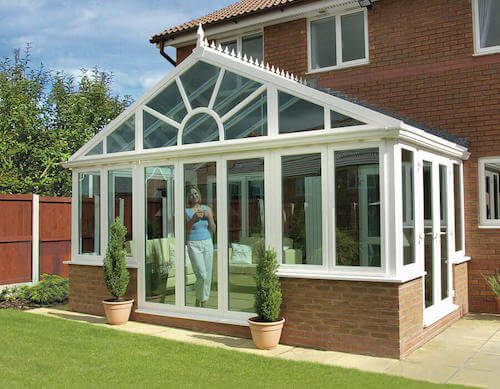
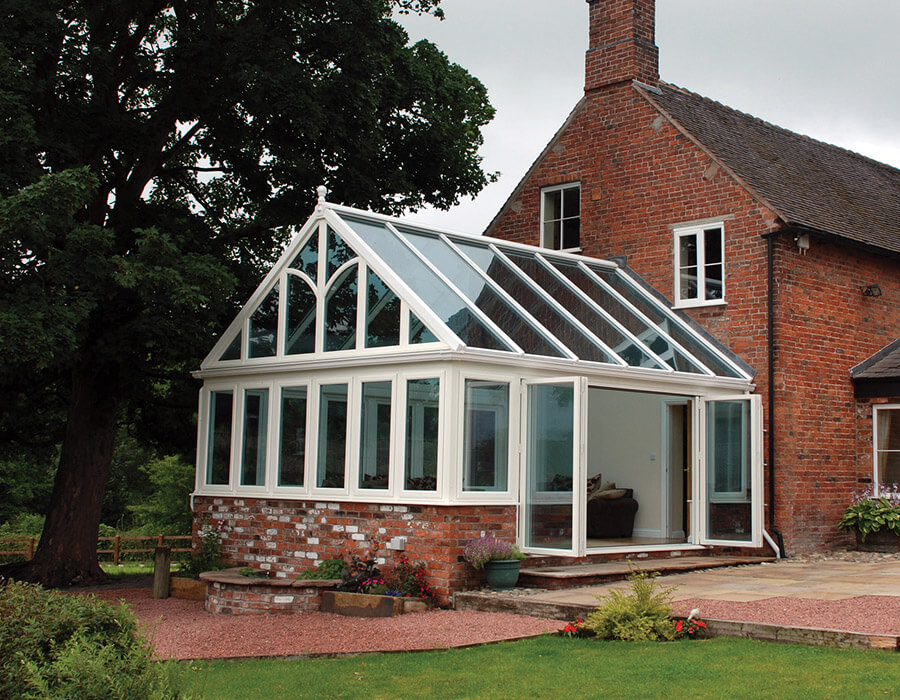
A conservatory is a glazed extension attached to a home, with at least 75% of its roof and 50% of its walls made from glass or translucent material. This high ratio of glass is what legally and architecturally defines it as a conservatory rather than any other type of extension.
Modern conservatories come in several classic shapes: the Victorian, with its faceted bay front; the Edwardian, which offers a more rectangular, space-efficient footprint; and the lean-to, a clean, contemporary option that works well on bungalows or properties with limited head height.
Because of their extensive glazing, conservatories bring extraordinary levels of natural light into a home. They feel like a genuine connection between the garden and the interior, creating a bright, airy space that works beautifully as a sitting room, playroom, or informal dining area.
At Renaissance Conservatories, our conservatories are designed and manufactured to your exact specification, with a choice of uPVC or aluminium frames, a full range of colours, and modern energy-efficient glazing as standard.
What is an orangery?
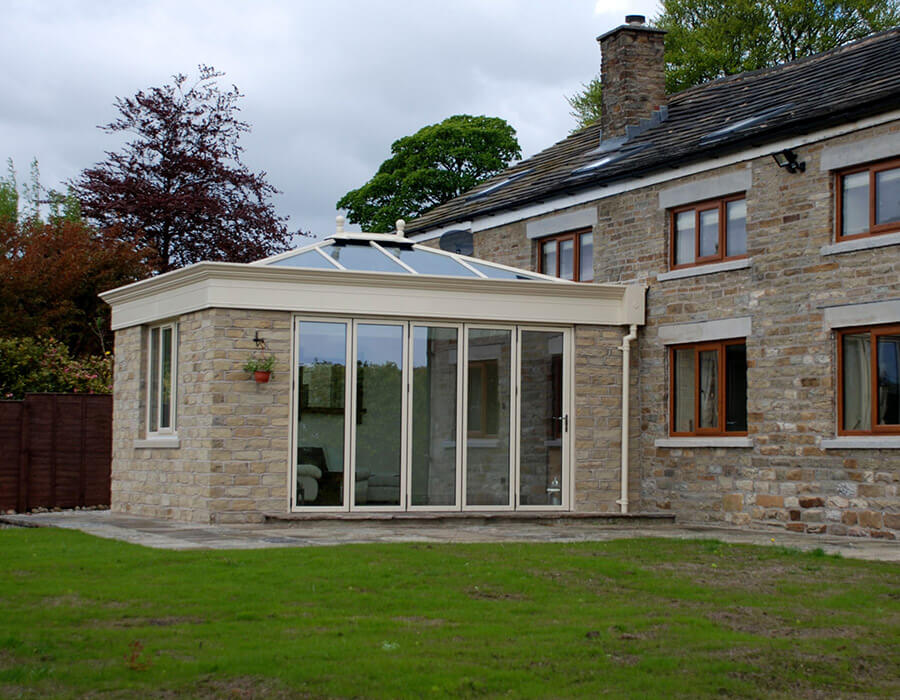
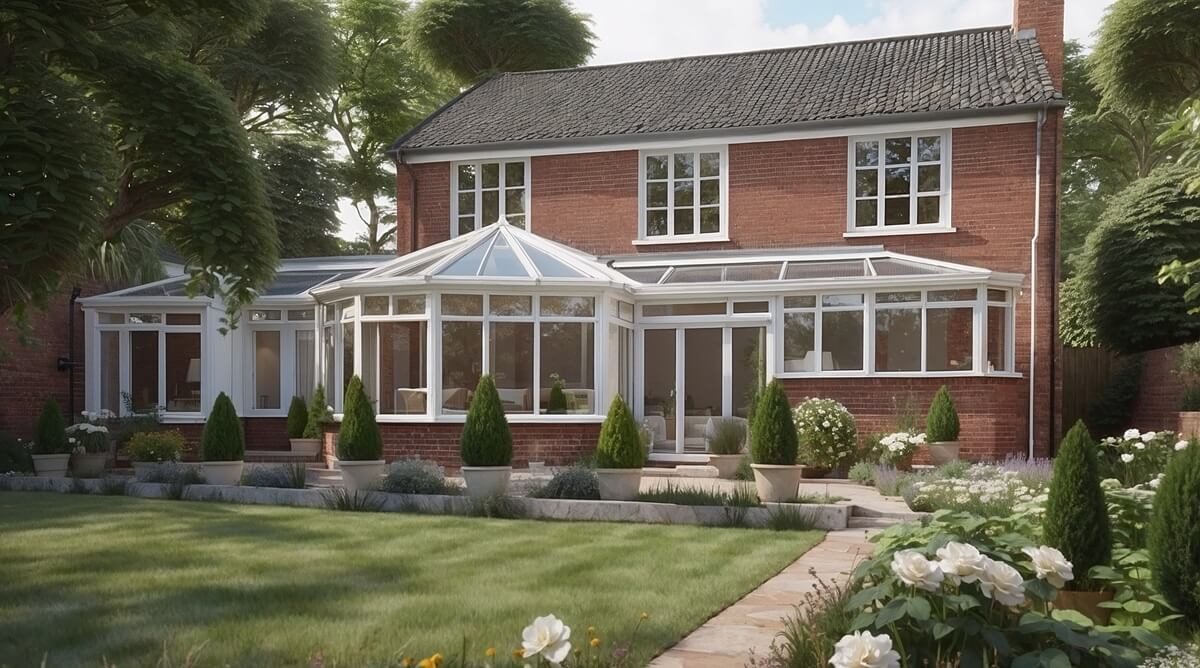
An orangery is a hybrid between a full house extension and a conservatory. It uses solid brick or rendered columns, a flat or low-pitched perimeter roof with a plastered soffit, and one or more glazed roof lanterns at its centre to draw daylight deep into the room.
The result is a structure that feels far more like a permanent room than a conservatory. The solid walls and roof sections improve thermal retention, reduce noise, and create a more intimate interior environment.
Why is it called an orangery?
The name comes from the structure’s original purpose. As documented in Renaissance Conservatories’ own history of orangeries, the orangery was born in 17th-century Europe as a place to protect exotic citrus trees, oranges, lemons, and limes, through the cold northern winters. Large south-facing windows and stone or brick walls that absorbed and retained heat created the warm, light-filled conditions the fruit trees needed.
Our bespoke orangeries in South Devon carry that same design language forward, combining the grandeur of the form with modern materials and insulation.
What is the main difference between a conservatory and an orangery?
The core difference comes down to the proportion of glass to solid structure.
| Feature | Conservatory | Orangery |
| Walls | Predominantly glazed (min. 50% glass) | Brick or rendered pillars with large glazed panels |
| Roof | Pitched glazed roof (min. 75% glass) | Flat solid perimeter roof with central lantern |
| Interior feel | Light, open, garden-room style | Warm, room-like, more integrated with the house |
| Insulation | Dependent on glazing spec | Naturally better due to solid roof/walls |
| Planning | Often permitted development | Often permitted development |
| Typical cost (UK) | £15,000-£30,000+ | £25,000-£50,000+ |
| Best suited for | Maximum light, garden views | Year-round use, period properties, formal dining |
Roof structure: the defining difference
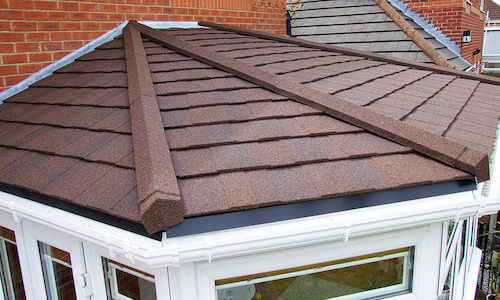
If you had to point to one architectural element that separates the two, it is the roof. A conservatory roof is glazed; an orangery roof is predominantly solid, with a lantern cut into it. That lantern, usually a raised rectangular or square framework of glass, is what lets light into the room, but far less of it enters than through a full conservatory roof.
This matters in practice. A conservatory on a south-facing wall in summer can overheat without solar control glazing. An orangery, with its solid perimeter roof shading the walls below and only a fraction of the sky exposed through the lantern, stays cooler in summer and retains heat far better in winter.
Construction differences
A conservatory is typically built on a dwarf wall (around 600mm high) with a glazed frame sitting on top. The construction process is relatively fast; most conservatories are installed within one to three weeks once groundworks are complete.
An orangery requires more substantial brickwork, a structural flat roof, and the installation of a glazed lantern. Groundworks are deeper, and the build programme typically runs to four to eight weeks depending on size and complexity. That extra time reflects the fact that an orangery is, in structural terms, much closer to a traditional house extension than a conservatory.
Which adds more value to your home?
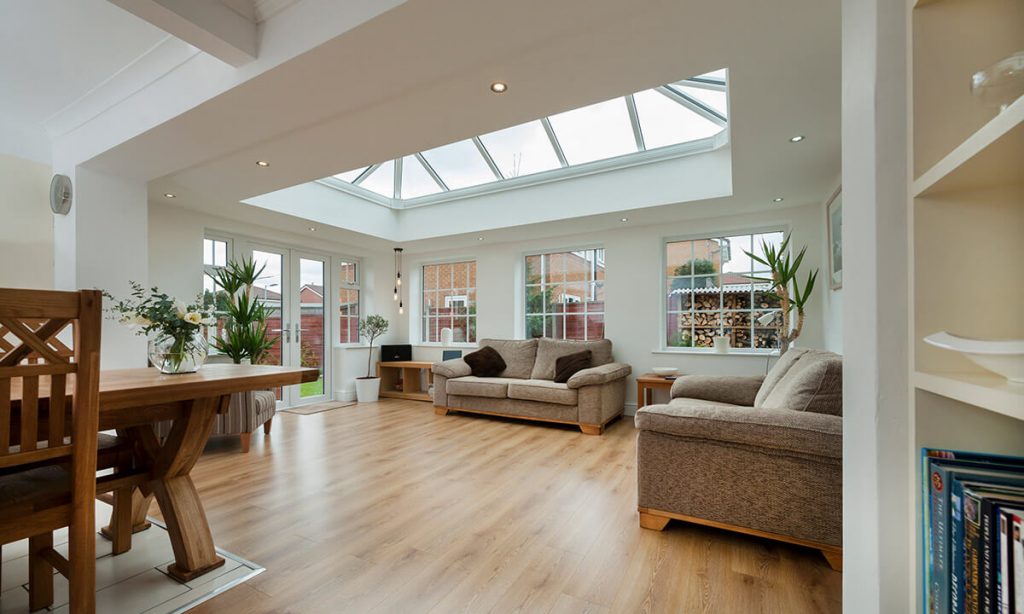
Both structures add value. The key factor is build quality. A poorly specified or dated conservatory can actually detract from a sale, while a sympathetically designed orangery in brick that matches the house, as the team at Renaissance Conservatories produces across South Devon, is more likely to be viewed by buyers as genuine additional square footage.
If long-term value retention is a priority, the orangery generally has the stronger case.
Which is right for your home?
There is no universal answer. The right choice depends on your home’s style, your budget, and how you plan to use the space.
Choose a conservatory if:
- You want to maximise natural light and garden views
- Your budget is tighter and you want a fast, clean installation
- The extension will be used seasonally or as a casual family room
- Your home is a newer build where a lighter structure suits the aesthetic
Choose an orangery if:
- You want a room you can use comfortably all year round
- Your home is a period property, Victorian, Edwardian, or Georgian, where brickwork reads more sympathetically
- You are planning a formal dining room, kitchen extension, or home office
- Long-term property value is a primary consideration
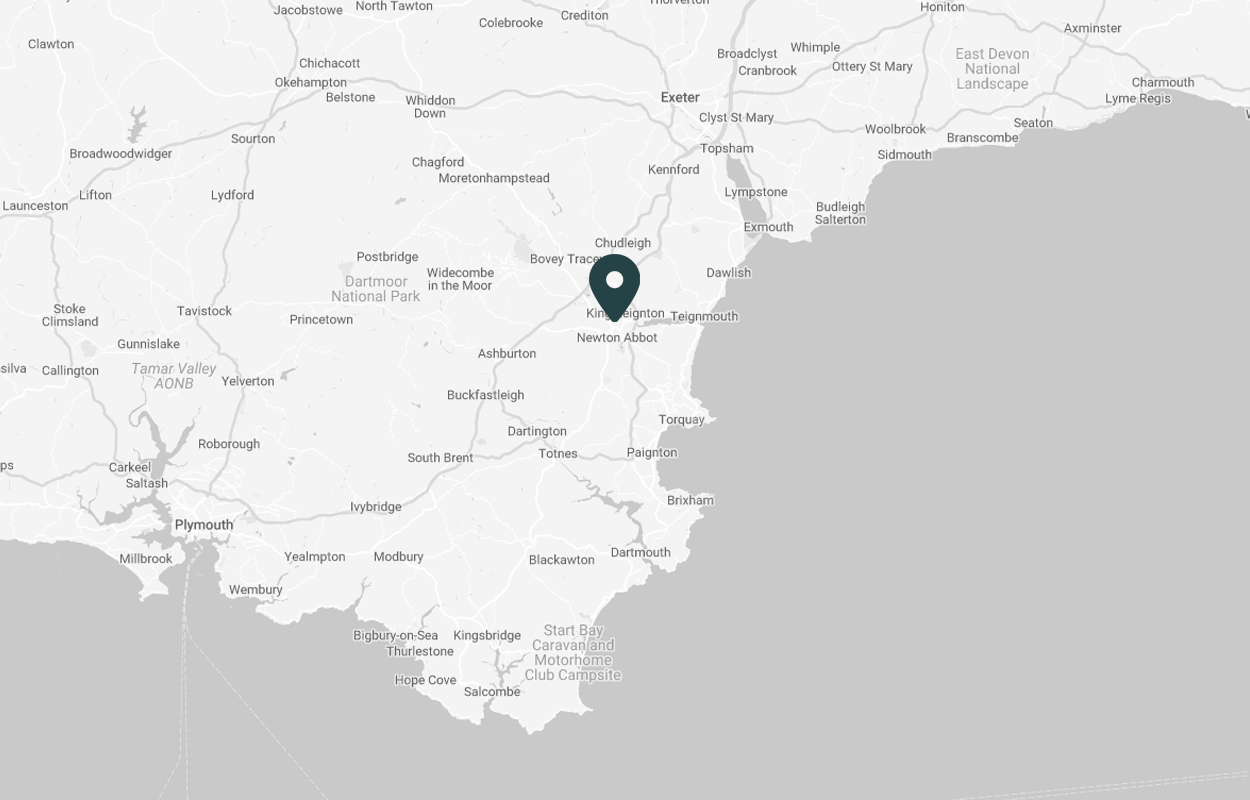
At Renaissance Conservatories, we design and install both conservatories and orangeries across South Devon, from Newton Abbot to Torbay and the South Hams. Whether you are drawn to the light-filled openness of a glass conservatory or the architectural presence of a lantern-lit orangery, we will help you find the right solution for your home. Get in touch with our team for a free, no-obligation quote or call 01626 333 393.
Are you interested in improving your home? Get in touch with Renaissance Conservatories, your local conservatory specialists today!
Get a FREE quote today