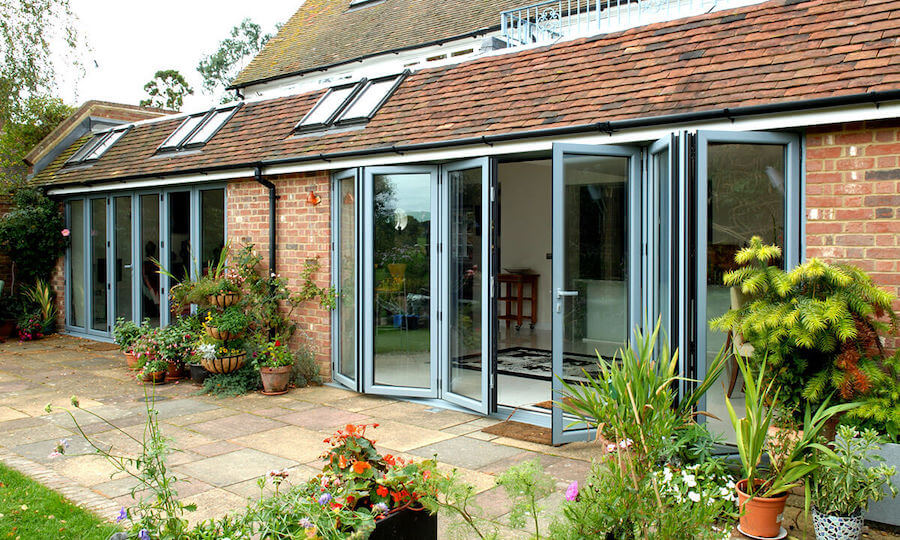

Most conservatories in England do not need planning permission. If your design sits at the rear of the property, stays within size and height limits, and covers less than 50% of your original garden, it will almost certainly qualify as permitted development. The five styles that most consistently meet those criteria are the lean-to, Edwardian, Victorian, glass-to-floor, and orangery-style extension. Read the full guide below for design-by-design detail, and expert advice from the Renaissance Conservatories team in Devon.
What are permitted development rights for conservatories?
Permitted development (PD) rights are a set of central government rules that let homeowners extend their properties without making a full planning application. The Town and Country Planning (General Permitted Development) Order 2015 and its amendments govern what qualifies, and conservatories fall squarely within that framework in most cases.
In practical terms, this means you can add a light-filled glazed extension to your home without waiting weeks or months for council approval, and without an application fee.
The best conservatory designs that typically don’t need planning permission
At Renaissance Conservatories, we work with homeowners across South Devon to design and build extensions that are beautiful, energy-efficient, and straightforward to approve. Here are the styles that most comfortably sit within permitted development limits.
1. Lean-to conservatory
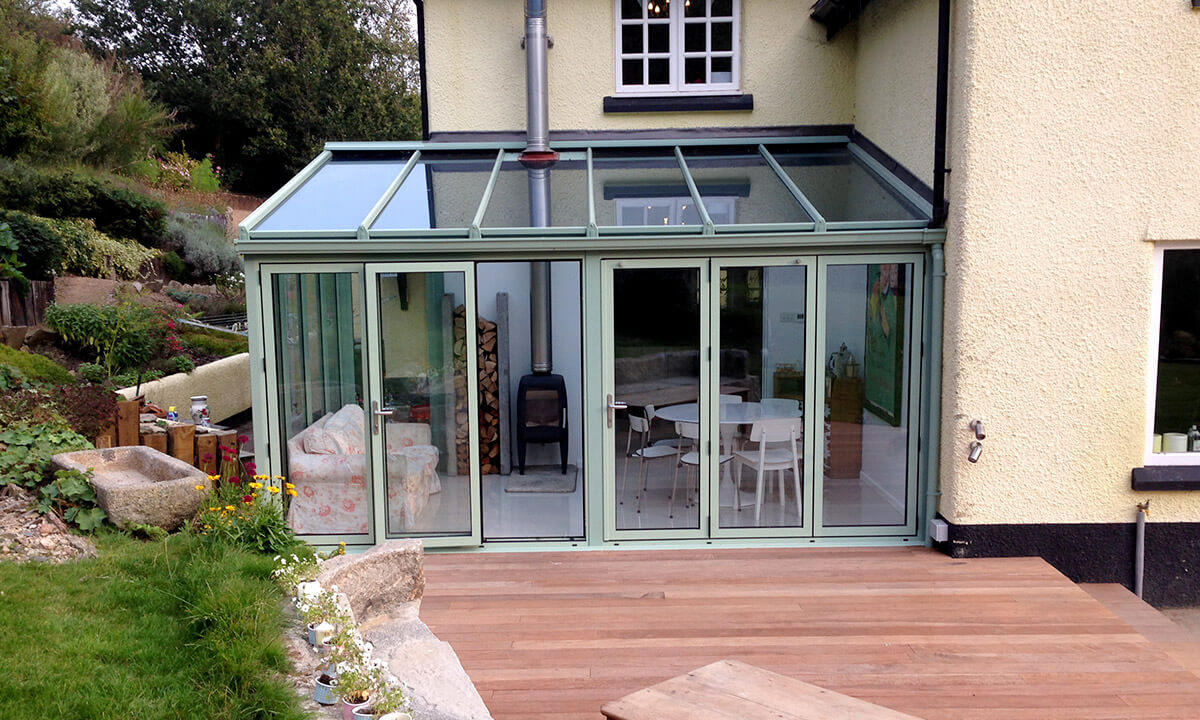
The lean-to is the easiest conservatory design to build within permitted development rules. Its simple sloping roof, low profile, and compact footprint make it unlikely to breach height or depth thresholds.
Because lean-to conservatories are typically shallow in depth and have a single-pitch roof that follows the angle of the existing house, they rarely come close to the 4-metre height cap. This makes them the go-to choice for bungalows, flats with rear access at ground level, and homes with low eaves or restricted rear gardens.
- Lower overall build cost compared to pitched-roof styles
- Suits contemporary and period properties alike
- Minimal sightlines when built in aluminium create a seamless indoor-outdoor connection
- Works on narrow plots where width restrictions apply
2. Edwardian conservatory
The Edwardian design maximises usable floor space more efficiently than almost any other style, which makes it the most popular choice among Devon homeowners looking to extend a kitchen or create a permanent family room.
Its square or rectangular layout and high ridged roof mean every square metre of footprint translates directly into liveable space, with no awkward curved bay eating into the room. Because the design is right-angled, furniture fits naturally, and the room reads as a genuine extension rather than an add-on.
For homes where side-extension rules apply, the hip-back Edwardian variant reduces the roof height at the back to comply with boundary restrictions, giving you the generous internal volume of a full-height Edwardian without triggering the need for planning consent.
- Full-height glazing at the front creates a wall of glass and floods the room with light
- Gable-end variant adds a vertical front apex that increases headroom and brings in even more natural light
- Woodgrain-effect uPVC or powder-coated aluminium frames complement both Victorian and modern brick properties
- Climate control glass filters solar gain, keeping south-facing rooms comfortable all year
3. Victorian conservatory
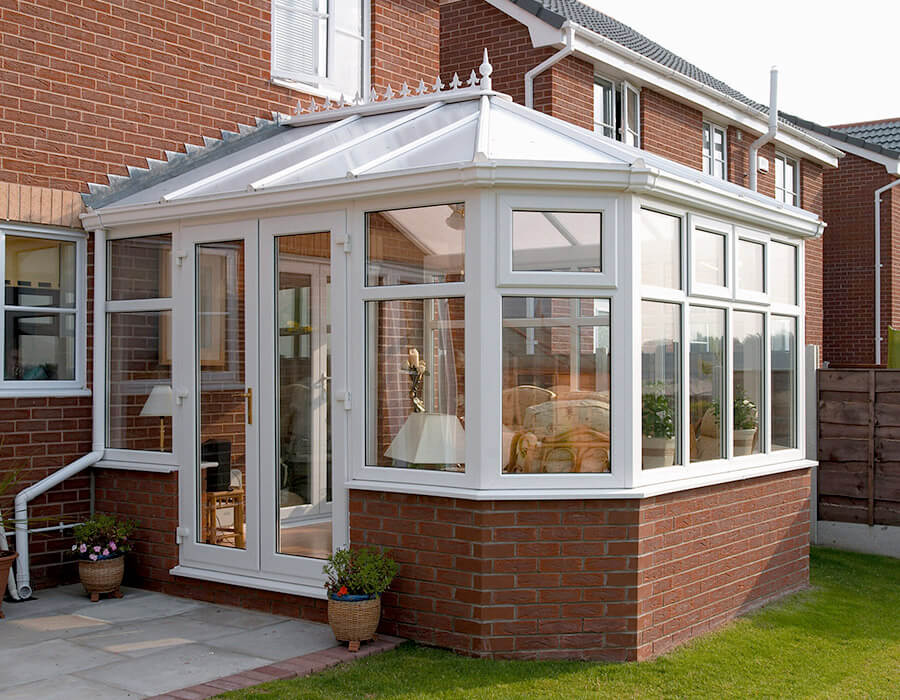
The Victorian style brings the most character of any glazed extension and can be built within permitted development rules when sized correctly.
Its faceted bay front and steeply pitched ridge roof are the defining features, giving period properties a sympathetic extension that feels designed rather than bolted on. Three-facet and five-facet versions are available; the three-facet option has a smaller footprint, making it easier to keep within depth and width limits on tighter plots.
Decorative ridge tiles, ornate cresting, and finials can all be specified without affecting the structural envelope. This means you can achieve a highly characterful, ornamental conservatory while staying comfortably within PD rules.
4. Glass-to-floor conservatory
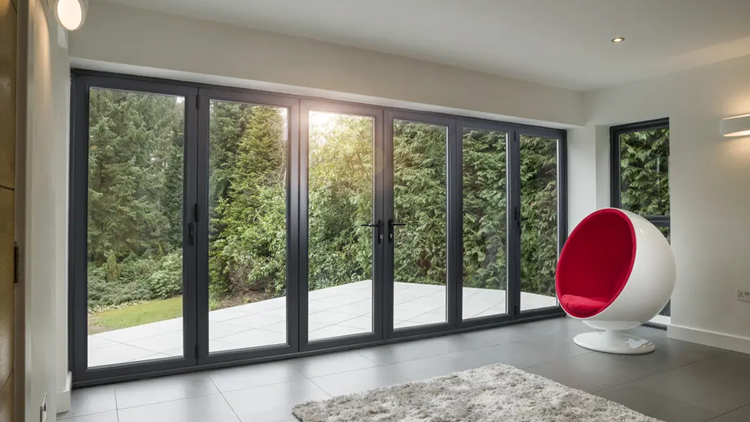
A glass-to-floor design replaces the traditional dwarf wall with full-height glazing, giving uninterrupted views across the garden and flooding the interior with natural light at every hour of the day.
This is a permitted development-friendly option because the structural envelope, roof height, and depth are identical to a standard Edwardian or lean-to build. The difference is purely in the glazing specification rather than the footprint. That means you can achieve a contemporary, almost frameless aesthetic without triggering a planning application.
From a thermal performance standpoint, full-height glass does require high-specification glass to prevent excessive heat loss in winter. Renaissance Conservatories uses advanced glazing options including solar or heat-reflective glass with U-values as low as 1.0, which handles South Devon’s coastal climate without compromise.
5. Orangery-style extension
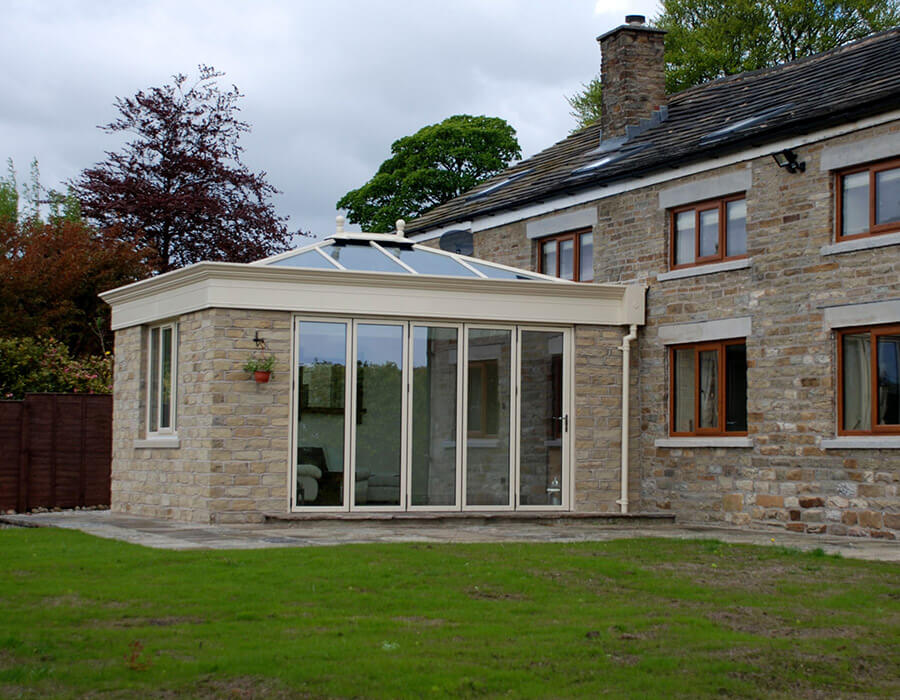
An orangery sits at the premium end of the market and, when sized within PD limits, avoids the planning process entirely. It bridges the gap between a traditional conservatory and a permanent brick extension, combining solid columns and a flat perimeter roof with a central glazed lantern roof.
The solid brick or rendered elements provide natural thermal mass, which means far better insulation than a fully glazed structure. This alone makes orangeries a standout choice for homeowners who want a year-round room rather than a seasonal space.
Because the footprint and height rules are identical to conservatories under PD, an orangery of standard proportions will typically qualify without any formal application. The result is a space that feels architecturally considered and permanent.
Explore orangeries from Renaissance Conservatories
When will you definitely need planning permission?
Even with permitted development rights, some scenarios will always require a full planning application:
- Listed buildings require Listed Building Consent for any external alteration
- Conservation areas have stricter controls, particularly on materials and visibility from the street
- Front elevations facing a highway always require permission
- New-build homes built from June 2022 may have PD rights removed by the developer’s original planning consent
- Properties with Article 4 Directions attached to their title deeds have had PD rights formally withdrawn
If you live in South Devon and are unsure whether any of these apply to your property, the Renaissance Conservatories team can advise during a free design consultation.
Whether you want a compact lean-to that transforms a dark corner of your home, a full-width Edwardian that doubles your living space, or a premium orangery with a lantern roof, the Renaissance team will design something that works for your plot, your property, and your budget.
Get a free quote from Renaissance Conservatories or call 01626 333 393 to speak to the team today.
Are you interested in improving your home? Get in touch with Renaissance Conservatories, your local conservatory specialists today!
Get a FREE quote today